Explore 15 free textbook and academic resource platforms for university students, including OpenStax, Google Scholar, LibreTexts and MIT OpenCourseWare.
Finding useful academic materials does not always require buying another textbook. University students can access free digital books, research papers, lecture notes, videos and practice exercises to support their studies.
Whether you are studying business, computer science, education, health sciences or the humanities, these resources can help you explore difficult topics and find additional reading for assignments.
The platforms below offer different types of access. Some provide complete textbooks for free, while others help you discover research, borrow books or study individual concepts. Use them alongside your prescribed readings and follow your lecturer’s requirements when selecting academic sources.
 Become a Forever Business Owner
Buy Forever products at a discount, earn retail profit and get team support. Join my team.
See how it works
Advertise here
1. OpenStax
OpenStax publishes free, openly licensed textbooks written and reviewed by educators. Its subject collections include business, computer science, mathematics, science and social sciences.
Students can read textbooks online or download free PDF editions. Printed copies and optional learning tools may carry separate costs.
How to use it: Find a chapter that matches your lecture topic, study its examples and attempt relevant practice questions.
2. Open Textbook Library
The Open Textbook Library, supported by the Open Education Network, provides openly licensed university textbooks available to download without charge.
Its collections cover subjects including accounting, management, computer science, education, mathematics, psychology and natural sciences.
How to use it: Compare a textbook’s contents with your course outline and select chapters that address your current learning objectives.
3. OER Commons
OER Commons brings together educational resources such as textbooks, lessons and learning activities.
University students should look for materials suitable for Higher Education and check the subject, intended audience and resource licence.
How to use it: Search for a specific concept, such as “research methods” or “organisational behaviour,” to find additional explanations and activities.
4. LibreTexts
LibreTexts offers open educational content through subject libraries, including textbooks and supporting learning materials.
Its resources include case studies, laboratory activities and interactive content that can help students explore topics beyond their lecture notes.
How to use it: Revisit a difficult definition, follow a worked example or explore a practical application of a concept.
5. Google Scholar
Google Scholar helps students discover scholarly literature and explore related research.
Not every result provides free full-text access. Look for PDF or HTML links and select “All versions” to check whether an accessible copy is available elsewhere.
How to use it: Search using your assignment’s main concepts, read the relevant papers and evaluate their findings before citing them.
6. Directory of Open Access Books
The Directory of Open Access Books (DOAB) helps readers discover peer-reviewed, open-access academic books across different disciplines.
It is useful when you need a detailed discussion of a subject rather than a brief introduction.
How to use it: Search by topic, review the book description and identify chapters relevant to your coursework or research.
7. IntechOpen
IntechOpen provides open-access scholarly books and chapters, including material in science, technology, engineering and health-related fields.
Some chapters address specialised research topics, so check whether the content matches your level of study.
How to use it: Explore a relevant chapter after understanding the introductory concepts in your assigned readings.
8. Open Library
Open Library is a searchable book catalogue with reading or borrowing options for some titles.
A catalogue listing does not guarantee free access to the complete book. Check each title’s available options; borrowing may require an account and depend on availability.
How to use it: Search by author or title, then confirm whether the edition you need is available to read or borrow.
9. Project Gutenberg
Project Gutenberg offers free ebooks, particularly older works whose copyright has expired in the United States.
Its collections are useful for classic literature, historical texts and philosophical writing. Older scientific works should be read in their historical context rather than treated as current evidence.
How to use it: Read original literary or historical works when an assignment requires direct engagement with a primary text.
10. BCcampus OpenEd
BCcampus OpenEd provides access to open textbooks and other educational resources through its open education initiatives and linked collection.
How to use it: Find an additional textbook that explains a course topic using different examples or a structure you find easier to follow.
11. MERLOT
MERLOT is a collection of online learning materials, including resources relevant to university study.
Materials vary in format and may link to external websites. Check each item’s access conditions and suitability.
How to use it: Look for demonstrations, exercises or learning activities that allow you to practise a concept after reading about it.
12. OpenLearn from The Open University
OpenLearn offers free learning content from The Open University across a range of subjects.
Its courses and articles can provide an introduction to an unfamiliar topic or support revision.
How to use it: Choose a short course that addresses a gap in your understanding and study the relevant sections alongside your university materials.
13. MIT OpenCourseWare
MIT OpenCourseWare publishes free materials from MIT courses. Depending on the course, these may include lecture notes, assignments, examinations and videos.
Materials differ between courses, and some listed readings may need to be obtained separately.
How to use it: Select content that matches your current knowledge and use relevant exercises to strengthen your understanding.
14. Khan Academy
Khan Academy provides explanations and practice activities in areas such as mathematics, statistics, economics and computing.
It can help students revisit foundational concepts before returning to more advanced university readings.
How to use it: Study an explanation, attempt a related exercise and then solve a similar problem without following the example.
15. CORE
CORE brings together scholarly research from repositories and journals, helping readers discover open-access papers.
Its indexed content includes different publication types. Check whether a source is a peer-reviewed article, a preprint or another research output.
How to use it: Find publications relevant to your assignment and read their methods, findings and limitations before using them as evidence.
How to Choose the Right Academic Resource
Your starting point should depend on what you need to achieve.
| Your study need | Platforms to explore |
|---|---|
| Find an introductory textbook | OpenStax, Open Textbook Library, BCcampus OpenEd |
| Understand a difficult concept | LibreTexts, Khan Academy, OpenLearn |
| Discover research papers | Google Scholar, CORE |
| Find academic books and chapters | DOAB, IntechOpen |
| Explore additional course materials | MIT OpenCourseWare, OER Commons, MERLOT |
| Locate classic texts or other books | Project Gutenberg, Open Library |
No single platform will cover every course or provide every prescribed textbook. Search by the specific topic you need to understand.
How to Use Free Academic Resources Effectively
Begin with Your Course Outline
Identify your weekly topic, learning objectives and prescribed readings before searching for additional materials.
A focused search such as “confidence intervals worked examples” is more useful than searching only for “statistics.”
Compare Different Explanations
When a topic remains difficult, try another explanation. Read a textbook chapter, watch a relevant lesson or examine a worked example.
Then close the resource and explain the idea in your own words. Apply it to a new example to check your understanding.
Evaluate Each Source
Check the author, publication date, publisher and relevance to your assignment. For research papers, examine the study design and limitations.
A resource may be useful for learning a concept without being the most suitable source to cite in an academic assignment.
Reference the Material You Actually Used
Record the author, year, title and publication details while studying.
Cite the original book chapter or research paper you consulted, rather than citing Google Scholar simply because it helped you find it. Check generated references against your department’s required citation style.
Organise Downloads for Offline Study
Where downloads are available, save relevant materials in folders organised by course and topic. Keep the source details with each file so you can locate and reference it later.
Frequently Asked Questions
Where can university students find free textbooks?
OpenStax, Open Textbook Library, LibreTexts and BCcampus OpenEd are useful starting points for finding open textbooks. Availability depends on the subject and title.
Are all the resources on these platforms free?
Access varies. Some platforms provide free full-text materials, while others include catalogue records, borrowing options or links to publications that require payment.
Can these resources replace prescribed university readings?
Use them to support your learning and follow your lecturer’s reading and assessment requirements. An alternative textbook may explain a concept differently without covering everything required by your course.
Can I use these sources in assignments?
Use sources that meet your assignment requirements and evaluate each publication individually. Read the material, acknowledge the author and provide the required references.
Where should I begin when a topic feels difficult?
Identify the exact concept causing difficulty, find a matching explanation and practise applying it. Return to your lecture notes or assigned reading to connect what you have learned with your course requirements.
Free textbooks and academic resources give university students more ways to learn. Choose materials that address your immediate study needs, evaluate them carefully and use them to develop your own understanding.

Build a powerful professional brand with Isaac Mintah. Strategic LinkedIn optimisation, personal identity development, and reputation building for ambitious pro...
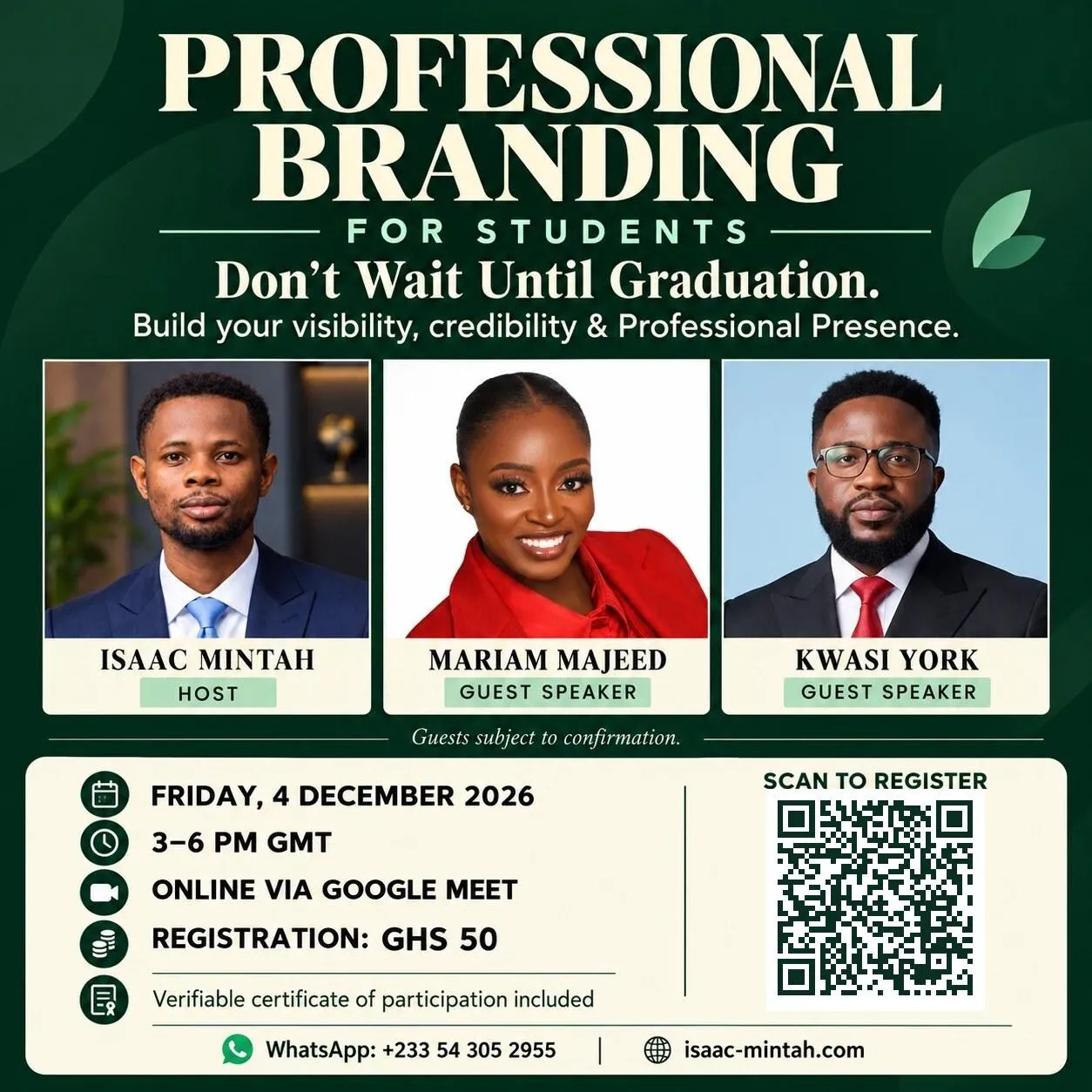 Professional Branding for Students
Live webinar, Fri 4 Dec: build a CV, LinkedIn and personal brand employers notice. GH₵50.
Register now
Advertise here

About the Author
Isaac Mintah
Entrepreneur, Author & Emotional Intelligence Coach. Founder of Activezoon Universal Limited Company.
Follow on WhatsApp ChannelGrab a Copy
Emotional Intelligence For Career Growth
Isaac Mintah's flagship book — get your copy now from Amazon or Jumia Ghana.
Leave a comment
Your email address will not be published. Required fields are marked *